
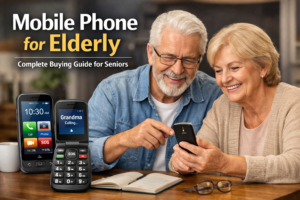
Making Communication Simple, Safe, and Accessible
In today’s fast-paced world, staying connected is more important than ever. However, not all mobile phones are created with elderly users in mind. Many seniors struggle with small screens, complex menus, and tiny buttons that make communication frustrating. That’s where a mobile phone for elderly comes in—a device designed to simplify technology, enhance safety, and keep seniors connected with family and friends.
These phones are crafted to prioritize usability, comfort, and practicality. They often feature larger buttons, clear displays, louder speakers, and simplified interfaces. Beyond convenience, they provide peace of mind to both the user and their loved ones.
This comprehensive guide will help you understand the features to look for, the types of phones available, and tips for selecting the right device for seniors. It also includes frequently asked questions to assist in making an informed decision.
Why Elderly Users Need Specialized Phones
As people age, vision, hearing, and dexterity can decline, making standard smartphones challenging to operate. Small icons, complex settings, and touch-sensitive screens may create frustration rather than convenience.
A mobile phone for elderly addresses these challenges by focusing on clarity, simplicity, and accessibility. For example, larger buttons reduce misdials, louder speakers ensure calls are heard, and simplified menus minimize confusion.
Moreover, these devices often include safety features such as emergency buttons, GPS tracking, or quick-dial options for family members, providing peace of mind to both users and caregivers.
Key Features of a Senior-Friendly Mobile Phone
When selecting a phone for seniors, consider the following features:
-
Large Buttons and Display: Ensure numbers and icons are easy to see and press, even for users with limited vision or dexterity.
-
Loud and Clear Audio: Phones should offer amplified speakers and ringtones, making it easier for elderly users to hear calls and alerts.
-
Simple Interface: Minimalist menus reduce confusion, allowing users to navigate without frustration.
-
Emergency Assistance Features: SOS buttons or dedicated emergency contacts improve safety and response in urgent situations.
-
Durable Build: Lightweight, sturdy designs with long battery life are ideal for daily use without frequent charging.
Phones designed with these features make communication not only possible but enjoyable.
Types of Mobile Phones for Elderly Users
There are several types of senior-friendly mobile phones to choose from:
Basic Feature Phones: These are traditional phones with numeric keypads, large buttons, and straightforward menus. They often include essential features such as calling, texting, and sometimes a simple camera.
Senior Smartphones: These are simplified smartphones with larger icons, voice commands, and accessible apps. They allow seniors to stay connected via social media, Manaress Car Accessories messaging apps, and video calls without the complexity of standard smartphones.
Hybrid Phones: These devices combine traditional and smart features. They often include large buttons, simplified navigation, and limited smart functionalities for messaging or internet browsing.
Choosing the right type depends on the user’s comfort level with technology and desired features.
Benefits of Using a Mobile Phone for Elderly
Owning a senior-friendly phone offers multiple benefits:
Enhanced Communication: Seniors can easily call or text family, friends, or caregivers without struggling with complicated menus.
Improved Safety: Emergency features, location tracking, and quick-dial options provide peace of mind.
Reduced Social Isolation: Simplified access to messaging and social apps helps maintain social connections, combating loneliness.
Ease of Learning: Intuitive design makes it easier for elderly users to learn and use technology confidently.
These advantages make senior-friendly phones a practical investment for enhancing independence and wellbeing.
Tips for Choosing the Best Mobile Phone for Elderly Users
When selecting a device, keep the following considerations in mind:
-
Identify the user’s primary needs: communication, emergency response, or social connectivity.
-
Test the phone’s ease of use before purchasing, ensuring buttons, screen, and menus are accessible.
-
Evaluate the volume and clarity of speakers for users with hearing challenges.
-
Consider battery life to avoid frequent charging, which can be inconvenient.
-
Check for additional safety features such as GPS or emergency alerts.
By prioritizing these factors, you can ensure the phone truly meets the needs of the elderly user.
Common Misconceptions About Senior Phones
Some people assume that senior-friendly phones are outdated or lack modern capabilities. In reality, many devices integrate smart functionalities while maintaining simplicity. Voice commands, video calling, and even lightweight app access are often available without overwhelming the user.
Another misconception is that these phones are only for seniors with impairments. In truth, any elderly user can benefit from simplified technology, regardless of their health or technical proficiency.
Enhancing User Experience
To maximize satisfaction and usability:
-
Customize settings for larger font sizes and higher contrast.
-
Set speed dial numbers for quick access to family or emergency contacts.
-
Enable loud ringtones and vibration alerts to ensure notifications are noticed.
-
Provide brief instructions or demonstrations for first-time users.
-
Encourage regular use to build confidence and familiarity with the device.
These small steps can make a big difference in how comfortable seniors feel with their phones.
Frequently Asked Questions
1. Are mobile phones for elderly expensive?
Not necessarily. Many affordable options provide essential features like large buttons, clear screens, and emergency functions.
2. Can seniors use smartphones with apps easily?
Yes. Senior smartphones are designed with simplified interfaces and large icons for easy navigation.
3. Are these phones suitable for people with hearing or vision problems?
Absolutely. Many devices feature amplified audio, high-contrast displays, and large buttons specifically for accessibility.
4. How do emergency features work on senior phones?
Most phones include SOS buttons or quick-dial options. Pressing the button sends a call or alert to pre-set contacts or emergency services.
5. Can a mobile phone for elderly connect to social media?
Some senior-friendly smartphones allow limited access to apps like WhatsApp, video calls, or social media, while keeping navigation simple.
Final Thoughts
A mobile phone for elderly is not just a tool; it is a lifeline that connects seniors to family, friends, and essential services. By focusing on usability, accessibility, and safety, these devices improve independence and provide peace of mind for both users and caregivers.
Choosing the right phone requires understanding the user’s needs, testing available options, and ensuring features like large buttons, loud speakers, and emergency functions are included. With the right device, seniors can stay connected, confident, and in control of their communication.
In a world where staying connected is more important than ever, senior-friendly mobile phones offer freedom, safety, and the joy of effortless communication. A thoughtfully chosen phone becomes more than a gadget—it becomes a bridge to family, friends, and peace of mind.